Genmaicha is Japanese green tea blended with roasted brown rice, which gives it a toasty, savoury flavour, sometimes described as popcorn-like. Matcha-iri genmaicha adds matcha powder to the blend, which makes the cup greener, richer and more vegetal. It is one of the easiest Japanese teas to like, and a good bridge for anyone who finds plain green tea too grassy. This guide covers five matcha genmaichas and one classic genmaicha without matcha, in tea bags and loose leaf.
Matcha-iri or plain? "Matcha-iri" means "with matcha". It adds colour and depth to the roasted rice flavour. Plain genmaicha is lighter and more toasty.
The picks
As an Amazon Associate, Matcha Spot earns from qualifying purchases, at no extra cost to you. How we choose and check products. Prices checked on October 30, 2026.

From Ito En's Oi Ocha line: matcha genmaicha in individually wrapped pyramid bags. The listing says it is good hot or iced.

Bancha green tea with roasted brown rice and matcha in a resealable bag of 50 sachets. The listing says each sachet brews one 12 oz cup.
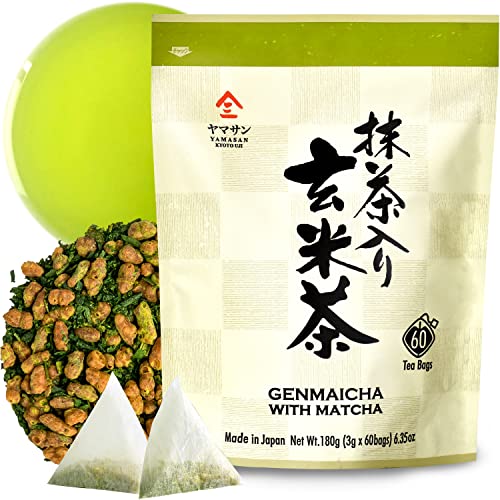
Sencha, Japanese roasted rice and matcha blended into tea bags in Japan, according to the listing, which also describes it as lower in caffeine than sencha or matcha alone because of the rice.
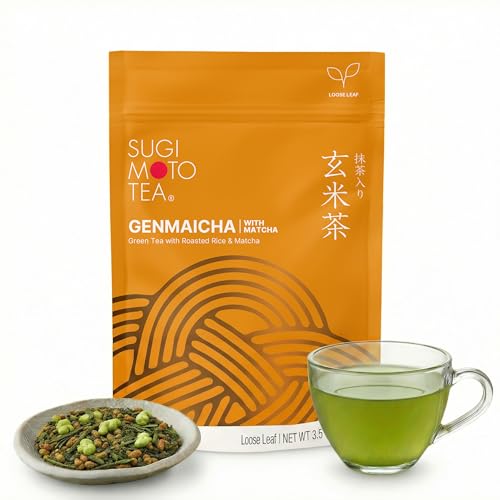
A loose-leaf matcha genmaicha from Sugimoto Tea, sourced from Shizuoka according to the listing. Loose leaf gives you control over strength, and the listing says it can be brewed hot or cold.
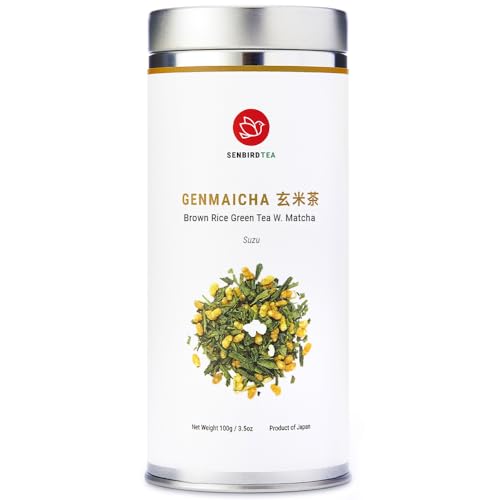
A small-batch Kyoto genmaicha that the listing says combines deep-steamed sencha, ceremonial grade matcha and roasted Koshihikari brown rice, and is tested for radiation and metals.

The classic version without matcha, for comparison: organic green tea with roasted rice, from one of the oldest Japanese tea brands. Lighter and more toasty than the matcha versions above.
How to brew genmaicha
Use about 1 teaspoon of loose leaf, or one bag, per cup, with water around 80–85°C, and steep for 30 seconds to 1 minute for loose leaf or 2 to 3 minutes for bags. Genmaicha is forgiving, but boiling water brings out bitterness from the green tea.
Caffeine
Because part of the blend is rice, a cup of genmaicha usually has less caffeine than the same amount of plain green tea, which makes it a popular afternoon or evening tea.
At a glance
| Genmaicha | Format | With matcha | Best for |
|---|---|---|---|
| ITO EN Oi Ocha | Tea bags (50) | Yes | Everyday bags |
| Harney & Sons | Sachets (50) | Yes | Big mugs |
| YAMASAN Kyoto Uji | Tea bags (60) | Yes | Made in Japan bags |
| Sugimoto | Loose leaf, 100g | Yes | Loose leaf value |
| Senbird Suzu | Loose leaf, 100g | Yes | Premium |
| Yamamotoyama | Loose leaf, 100g | No | Classic genmaicha |
Prices and stock were checked with Amazon on the date shown and change often. Product details come from each Amazon listing; we have not lab-tested these products.
Find matcha cafés near you
Taste what good matcha should be before you spend — find the best cafés in your city.
Find Matcha Near MeMore matcha guides
Frequently asked questions
What is matcha genmaicha?
Matcha genmaicha, or matcha-iri genmaicha, is genmaicha (green tea with roasted brown rice) with matcha powder added. The matcha makes the tea greener and richer.
Does genmaicha have caffeine?
Yes, from the green tea and matcha, but usually less than plain green tea because part of the blend is roasted rice.
Is genmaicha good for beginners?
Yes. Its roasted, nutty flavour is one of the easiest Japanese teas to like, especially for people who find plain green tea too grassy.